Published On: Dec 27, 2025
Last Updated: Oct 15, 2026
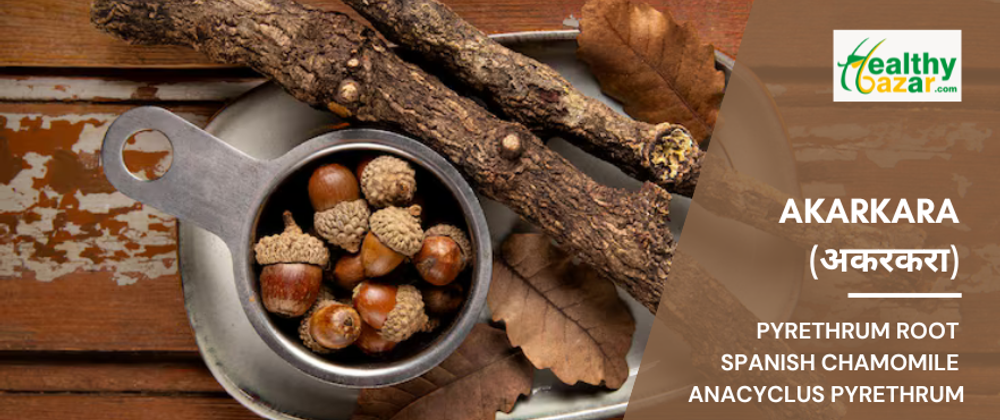
Akarkara, Latinized as Anacyclus pyrethrum, also known as Pellitory or Spanish Chamomile, has held a significant place in Ayurveda and Unani for centuries. In Ayurveda, it's appreciated for its “Ushna” (hot), pungent qualities that kindle the digestive fire, support respiratory health, aid nerve function, and boost vitality. Unani practitioners similarly use it for nerve tonic benefits, aphrodisiac action, and sialagogue (saliva-stimulating) effect. Modern research confirms its diverse pharmacology, ranging from analgesic, anti-inflammatory, immunomodulatory, neuroprotective, anticonvulsant, aphrodisiac, to cognitive-supporting activities.
Morphology – Habitat & Plant Characteristics
Akarkara is a daisy-like perennial in the Asteraceae family, native to the Mediterranean (including Spain and North Africa) and naturalized in parts of India like Jammu or Bengal. The plant has feathery leaves, white/purple-tinged daisylike flowers, and a characteristic wrinkled root with a cylindrical shape and glandular, radiate structure on cross-section. Its root emits a mild odour and pungent taste.
Source, Part Used & General Dose
- Part Used: Primarily the dried root, sometimes leaves.
- Typical Dosage (Ayurveda/Unani): Root powder ranges from 125 mg to 1 g per day; decoctions are used in systemic tonics. External or inhalation use doses may differ.
Properties of the Herb
- Ayurveda: Rasa—Katu (pungent), Tikta (bitter); Guna—Ruksha (dry), Tikshna (sharp); Virya—Ushna (hot); Vipaka—Katu (pungent). Known for its Vajikarak (aphrodisiac), Deepana (stimulating digestion), Vata-Kapha pacifying effect.
- Unani: Acts as a stimulant, nervine tonic, and respiratory support agent.
- Modern Science: Contains alkylamides like pellitorine, inulin, sesamin, and pyrethrin, all contributing to its anti-inflammatory, analgesic, antidepressant, spermatogenic, immunostimulating, and neuropharmacological actions.
Benefits by Health Concern
- Nervine & Cognitive Support: Used traditionally as a brain tonic; modern studies reveal neuroprotective and anticonvulsant properties, and may support memory and focus.
- Oral & Dental Health: Chewing or applying powdered root relieves toothache, gum issues, and stimulates saliva, a natural sialagogue.
- Respiratory Health: Employed against common cold, cough, asthma, bronchitis; helps clear mucus and ease breathing.
- Sexual Vitality: Valued as an aphrodisiac; studies in animal models and anecdotal reports suggest improvements in libido, spermatogenesis, testosterone levels, and fertility.
- Mood & Stress: Described as an adaptogen with antidepressant and calming effects, aiding stress, fatigue, and anxiety modulation—Ayurvedic texts highlight its Rasavaha and Pranavaha benefits.
- Analgesic & Anti-inflammatory: Root extract reduces inflammation and relieves joint or muscle pains.
- Immunity & Detox: Enhances immune response, lymphatic circulation, and is mildly diaphoretic and febrifuge.
Multiple / Side Benefits
Akarkara is credited with stimulating speech in children with stammering, acting as a brain tonic, improving energy levels, preventing nerve weakness, and is even used in insecticidal preparations.
Forms & Dosage
- Powder: 125 mg-1 g daily (root).
- Extracts: 125-250 mg.
- Decoction/Paste: Used topically or as lozenges for oral issues.
Product Formulation
In Ayurveda and Siddha, Akarkara is included in Vajikaran rasayanas, anti-stress tonics, cough syrups, dental powders, and memory-support blends.
Risk Factors / Precautions
- Not safe during pregnancy due to emmenagogue and abortifacient actions.
- May cause acidity, mouth ulcers, or gastrointestinal irritation at higher doses.
- Caution in liver or kidney impairment.
Side Effects
Potential side effects: heartburn, excess salivation, oral numbness or irritation, and headaches in sensitive individuals.
Conclusion
Akarkara is a multifaceted root revered across traditional systems and increasingly validated by modern science. Its roles span reproductive health, neuro-support, oral care, immune enhancement, and beyond. As with all potent herbs, mindful use under expert guidance ensures safe and effective outcomes.
FAQs
Q1. Does Akarkara really improve libido?
— Yes. Traditional Ayurvedic and Unani texts describe it as Vajikarak (aphrodisiac), and animal studies confirm enhancements in testosterone and sperm health.
Q2. Can I chew it for a toothache?
— Chewing or applying powdered root can ease tooth pain and stimulate saliva, providing quick, natural relief.
Q3. Does it help with memory or focus?
— Traditional use supports cognitive clarity; recent studies confirm neuroprotective and memory-enhancing benefits.
Q4. Is Akarkara safe during pregnancy?
— No. Its emmenagogue and abortifacient properties make it unsafe for pregnant or breastfeeding individuals.
Bibliography
- Planet Ayurveda – Akarkara (Anacyclus pyrethrum) – Ayurvedic properties, uses in libido, nerve tonic, oral and respiratory ailments; dosage 125 mg–1 g. Planet Ayurveda
- Dabur’s Ayurvedic Monograph on Akarkara – Botanical description, toothache remedy, lozenge use, rubefacient action, nasal snuff, and aphrodisiac use. Dabur
- Ask-Ayurveda wiki entry: Active Constituents & Mechanisms – Alkylamides (pellitorine), pyrethrins, inulin; effects on digestion, respiration, nerve stimulation, immunomodulation. Ask Ayurveda
- DrugTodayOnline – Akarkara Overview – Rich phytochemistry and broad pharmacology: anti-inflammatory, anticonvulsant, brain tonic; dosing guidelines and precautions. Drug Today Online
- Vedicus blog – Pellitory Root in Oral Health – Effective for toothache, gum issues, saliva stimulation; used in dental powders. blogs.vedicus.com
- Bimbima – Spilanthes Acmella (Akarkara) Ayurvedic Uses – Constituents, aphrodisiac, neurological, digestive, respiratory benefits; abortifacient caution. bimbima
- PharmEasy Blog – Akarkara Uses & Benefits – Digestive, stress-relief, respiratory aid, anti-cancer, immunity, libido enhancement summarised. PharmEasy
- Tata AIG Health Insights – Akarkara Benefits – Dental, sexual, immune, anti-inflammatory, cognitive, and detox advantages. TATA AIG
- BMC Complementary Medicine & Therapies (2023) – Experimental study: neuroprotective, anti-inflammatory, anti-Alzheimer’s potentials; active compounds & in silico modeling. BioMed Central
- Preserva Wellness blog – Akarkara Plant Profile – Botanical traits, folkloric uses, broad pharmacology including nerve, fertility, immunity, and metabolism. Preserva Wellness
- Wikipedia – Anacyclus pyrethrum species page – Botanical classification, habitat, conservation status, and traditional medicinal uses (brain tonic, androgenic effects). Wikipedia
 Where should we deliver your order?